Core idea
A document (photo/PDF/text) can be signed and recorded on the blockchain. The signer gets a verification link. Anyone can later verify the same document and confirm it matches the issued record.
Why this is useful
When a diploma or professional certificate exists only as a PDF/photo, it’s easy to forge and hard to verify. PRC7NET turns that document into a cryptographically verifiable record that can be checked by other people and companies.
- For a person: you receive a verification link and can share it with employers/partners.
- For a verifier (employer/company): you can validate authenticity and authorship using the original file and the provided verification link.
- For an issuer organization: you can run a cryptographically provable issuance process for diplomas/certifications.
Use case: issuing organization
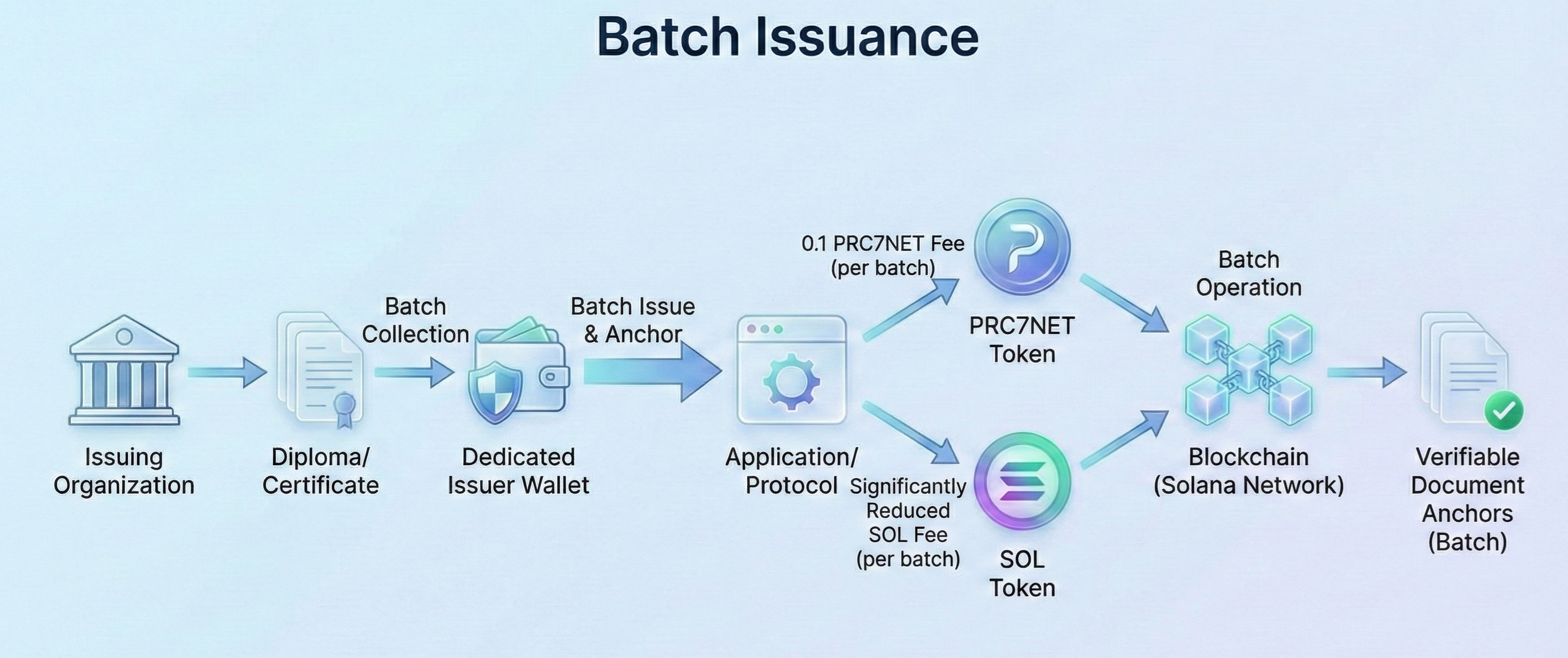
A company that issues professional or technical diplomas/certificates can anchor each issued document in the blockchain. This makes the issuance process tamper-evident and independently verifiable.
Steps: sign a diploma/certificate
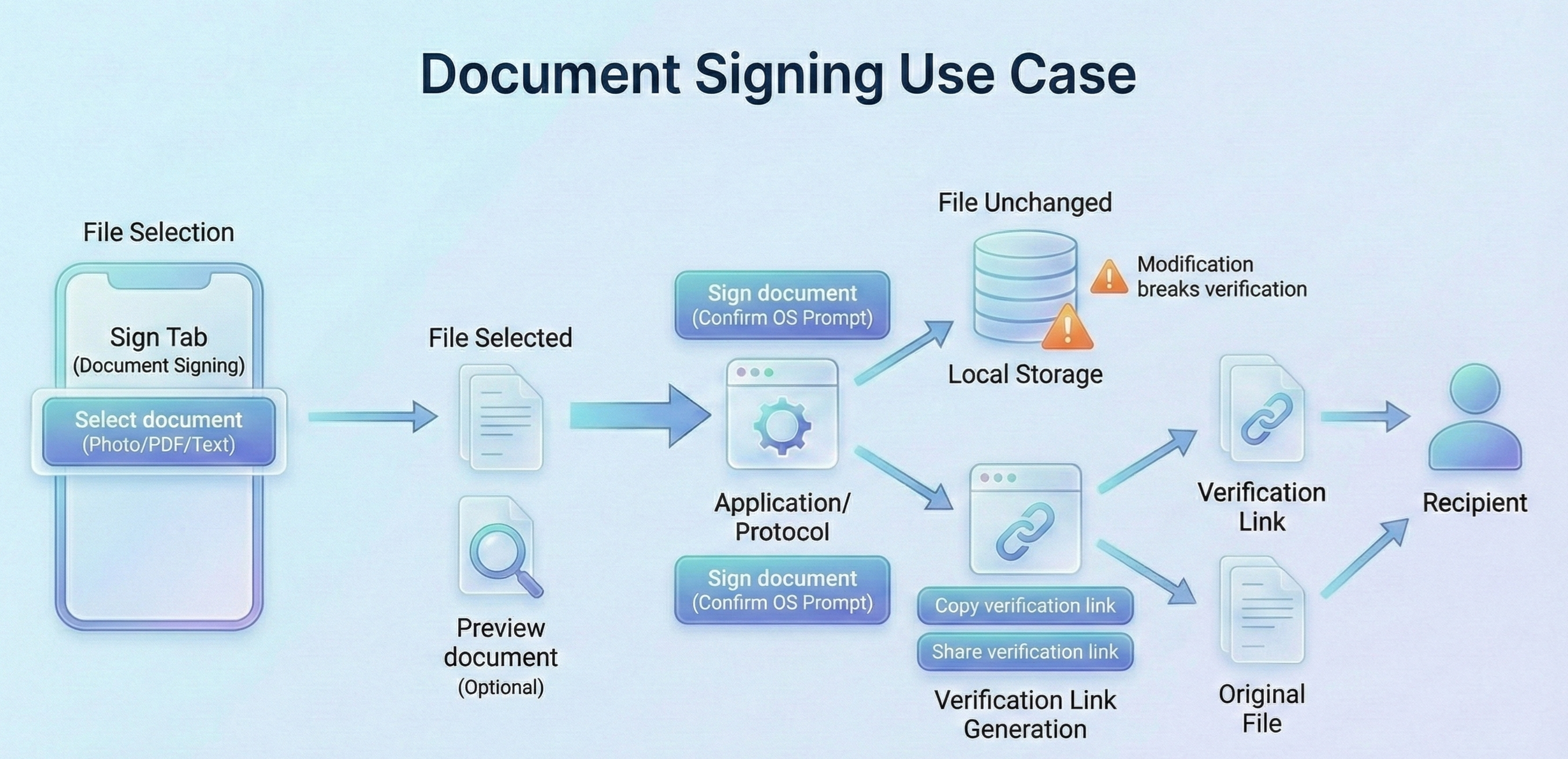
The issuer can sign either (a) a photo/PDF of the diploma/certificate or (b) a text file that contains all required fields. After signing, the original file must be kept locally unchanged.
Immutability rule
Modifying the image/text after issuance is not allowed. Even a small edit changes the document hash and verification will fail. Think of the anchored result as historical data.
Steps: verify a diploma/certificate
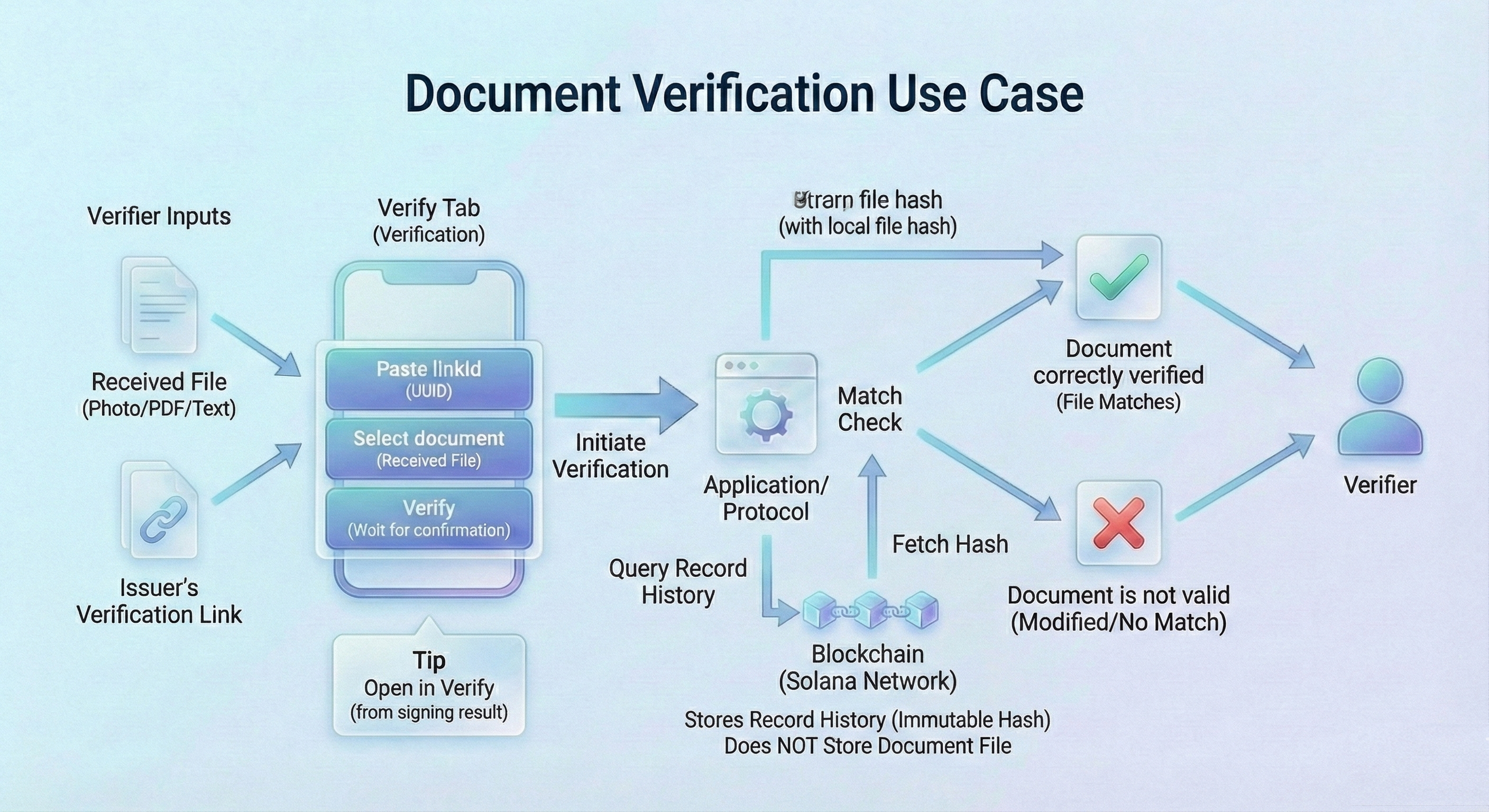
The verifier receives the diploma/certificate file (photo/PDF/text) and the issuer’s verification link. The app checks that the provided file matches the issued record and shows whether it is valid.
Keep a small operational balance as required by the app, so verification can complete successfully.
Use case: approver flow & consensus
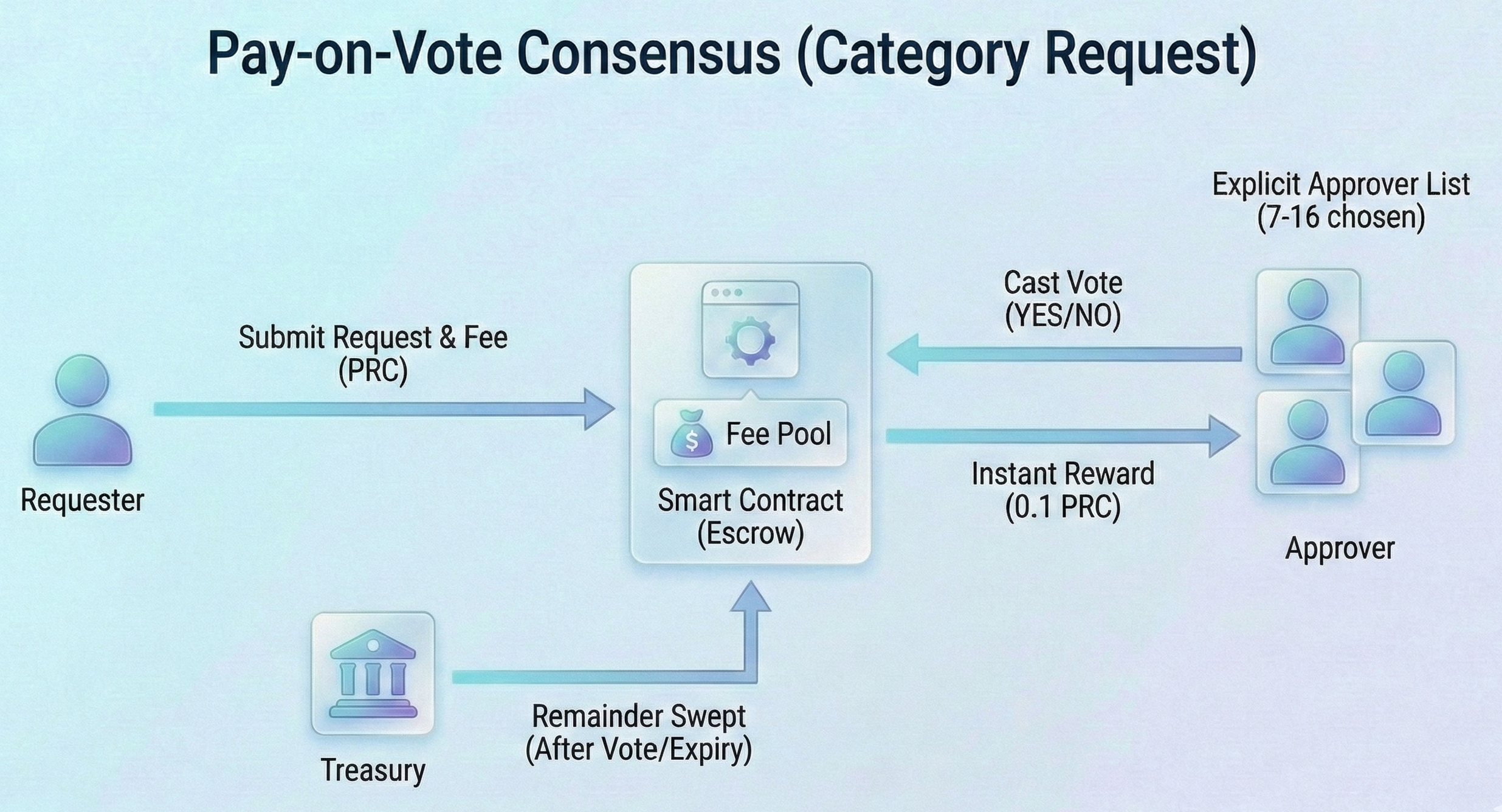
When a user requests a category level, the system creates a consensus process where designated approvers vote on the request. Each approver in the explicit list can review the request and cast their vote (approve or reject).
- Explicit approver list: Requester provides specific approvers (0-16, or exactly 7 for large groups)
- Pay-on-vote: Approvers earn a PRC reward when they submit any vote (YES or NO)
- Majority threshold: When enough approvals are reached, the request is approved
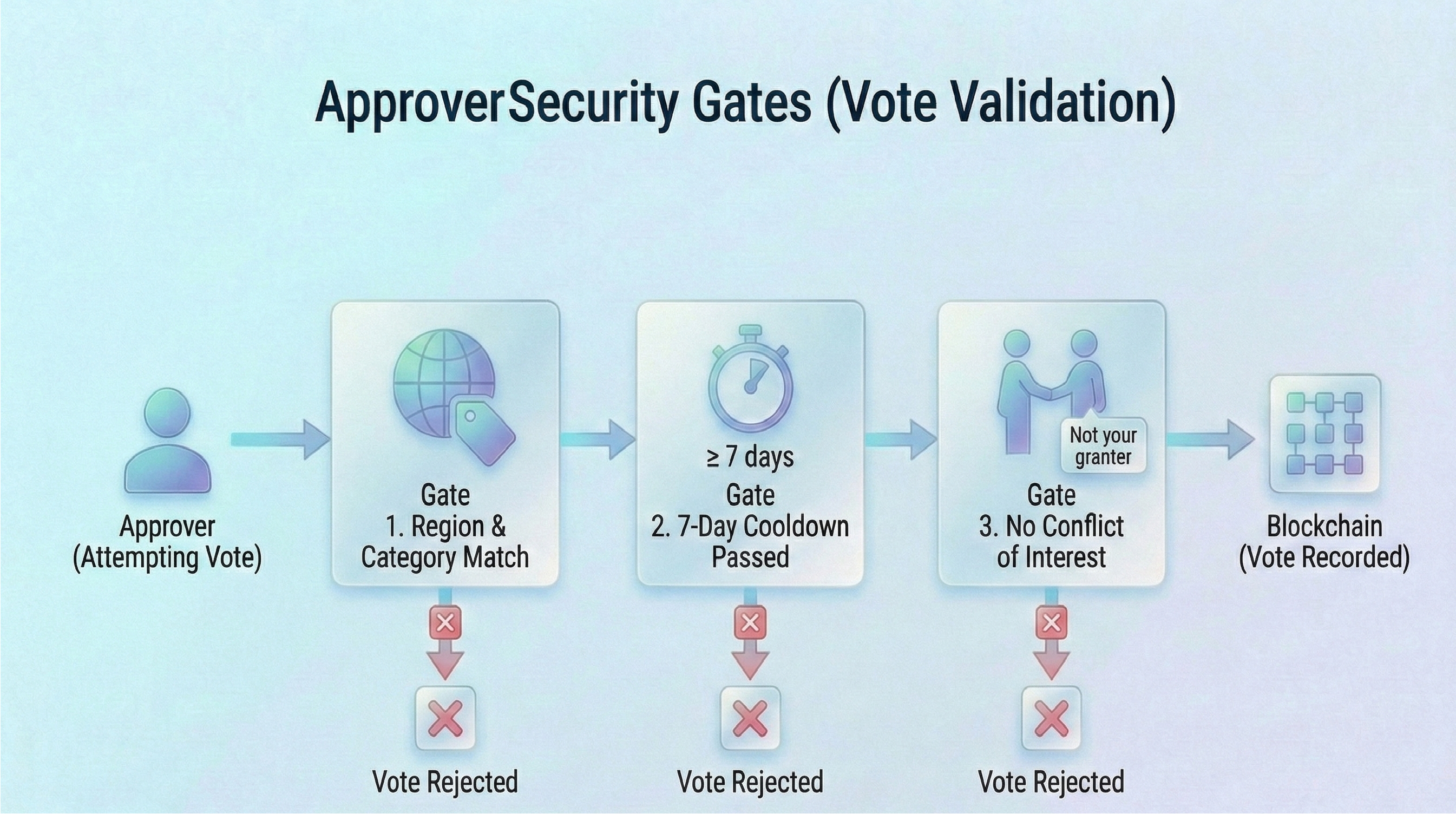
- Region & level checks: Approvers must be from same region and have higher level in that category
Smart contract rules
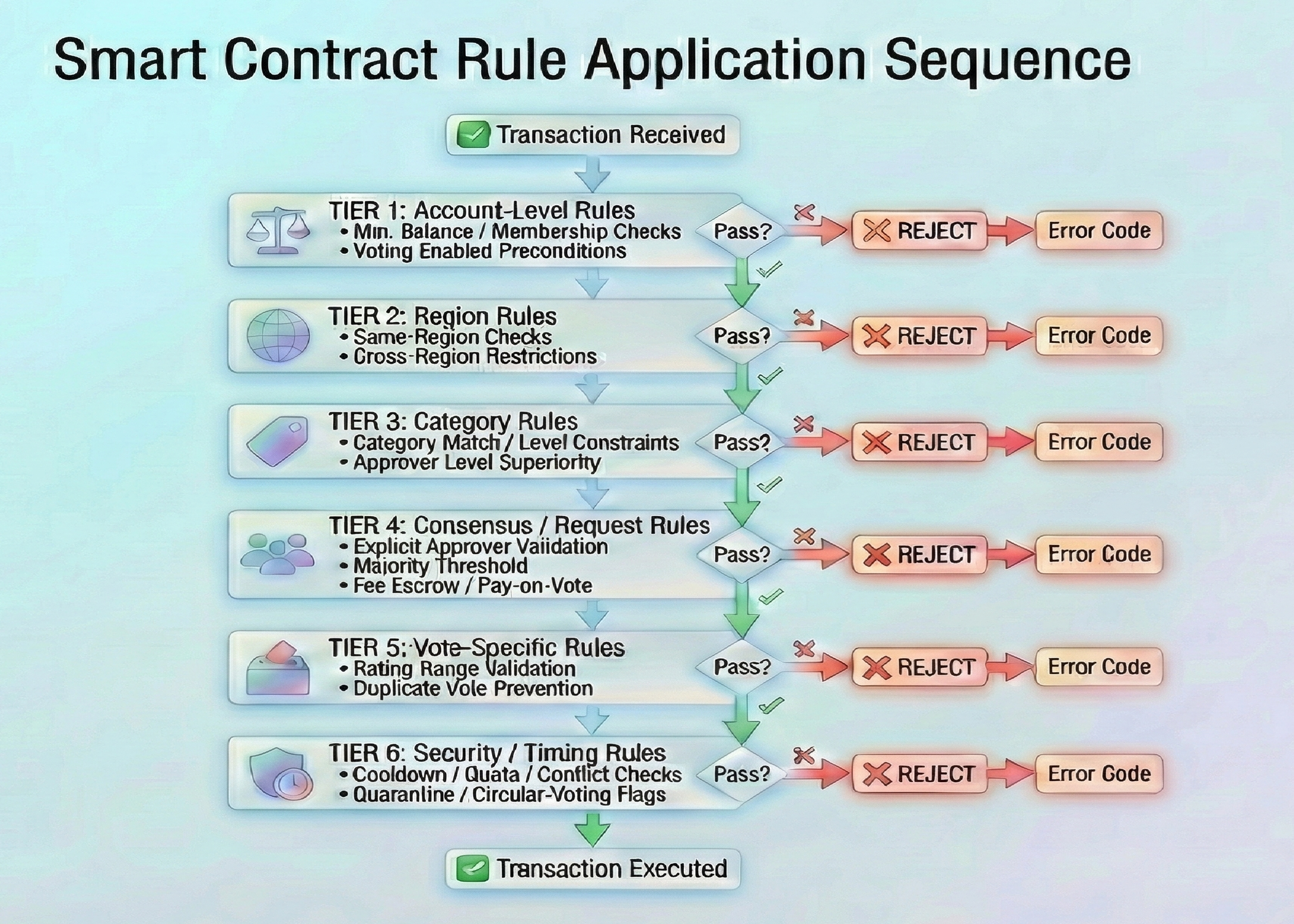
The PRC7NET smart contract enforces comprehensive validation rules to maintain network integrity and prevent fraud. All transactions are validated on-chain to ensure decentralized consensus.
- Balance requirements: Minimum 10 PRC to join, 1,000 PRC for voting eligibility
- Region isolation: Most voting restricted to same region (with level 100 exception)
- Category levels: Valid range 1-100, level progression based on votes received
- Approval thresholds: Majority rule or unanimous when level breakthrough required
- Security checks: 7-day cooldown, conflict of interest prevention, confirmation quotas
- Fee model: Pay-on-vote system with immediate treasury funding and escrow for approvers
Pay-on-vote & voting rewards
The consensus system rewards approvers for participating in category requests through a pay-on-vote mechanism. This ensures active participation and fair compensation for reviewers.
- Immediate payment: Approvers receive PRC tokens when they cast their vote
- Equal payout: Both YES and NO votes receive the same reward (9% of base fee per vote)
- Escrow model: Fees are held in request-specific vault until votes are submitted
- Treasury sweep: Any remaining escrow goes to treasury after approval or expiry
- No refunds: Requester's fee is non-refundable regardless of outcome